 |
|


If you want to launch a paid search marketing scheme, you need to know what’s in one. These types of schemes are pretty useful to get to grips with, but it does also require a little bit of thought.
Typically, when people do think about the typical paid search offering, they’re usually in for Google Search Ads. It makes sense, but a proper campaign of paid search advertising goes a lot further.
So, with that being said, let’s dive right into the primary components of a paid search campaign so you know exactly what’s what.
Paid search ads.
So, when we think about conventional pay-per-click options, most of us tend to go for search text advertisements. It’s a pretty standard practice.
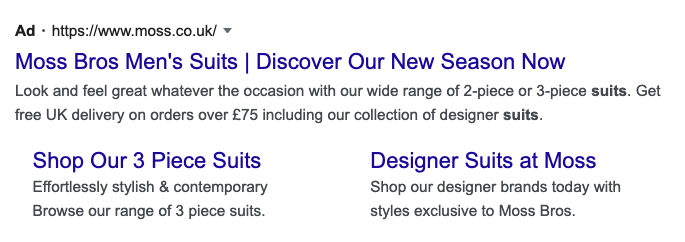
These types of search results display advertisements at either the top or the bottom of typical search engine results. They often include the word “Ad” or “Advertisement”. This is intentionally done to set them apart from organic ads.
These types of search ads are often so popular because they are versatile. They can be implemented at so many different stages of the marketing process.
On the surface, search ads might seem to be deceptively simple. However, the last decade or so has seen numerous changes for the process.
Initially, the search advertisements that you used were done by targeting specific keywords. So if the search term was “men’s suits”, and you had chosen those keywords, then, assuming all other criteria were met, your ads would be the ones to make an impression.
In recent times, however, targeting includes a broad combination of keywords and other factors. Remarketing, detailed demographics, customised audiences, in-market audiences, and customer matches can all crop up.
If this sounds like more hassle than you want to deal with, you can create search advertisements using Dynamic Search Ads. This option creates advertisements using your existing website content, and automatically targets them for you. With that being said, you need to make sure that you have tested and compared dynamic search advertisements to make sure that you know which offering performs better.

Search advertisements campaigns can be run using Google Network, which comprises both Google and its partner sites, and also Microsoft Network, which includes Bing.
Pay per click display ads.
Almost all of the comprehensive paid search campaigns that you’ll run into will have display ads. These are ads which include an image, which makes them markedly different from search ads.
You tend to find display ads most frequently when people visit websites that are part of the Google Display Network – think things like Gmail, YouTube, Twitter, etc.
This contrasts them with search ads, which only crop up when people are searching Google specifically for their products and services.
Basically, this means that those display ads will make an impression even though people aren’t specifically looking for a product or a service, which is an important distinction to make.

Because this distinction is so important, it means that the majority of advertisers will use their display ads at the top of the marketing funnel, even though they can work at most stages of it.
Thanks to the power of display advertising, you can see where an ad is shown based on the key features of your target demographic – think things like the interests, gender and age. They can also be targeted to those customers who connect via custom affinity audiences and in-market audiences, with topic targeting also a viable offering.
Your typical display advertisement is available via the GDN (Google Display Network) and Microsoft Network, as well as all affiliated options from both sides.
YouTube advertisements.
The thing about YouTube advertising is that it is quickly evolving into one of the most essential parts of comprehensive paid search advertising campaigns.

YouTube is a general practice that is good for building product awareness, as well as drawing attention to services that are at the top of the conversion funnel. However, it also excels in driving sales by using in-video advertisements. These types of advertisements can be implemented into YouTube directly, or through apps and websites that are part of the Google Display Network.
Sadly, one of the major failings of modern advertisement is a continued reluctance to use YouTube properly. The concerns of high production costs are enough to keep the majority of advertisers away from the platform. However, this is not strictly true. Whilst you could easily spend a considerable amount of money on production, you don’t have to. For example, using the YouTube video builder, you can create advertisements using nothing more than a few lines of text and some images.
Discovery paid ads.
At the other end of the spectrum, we’ve got what’s known as Discovery advertisements. These are good for generating user interest and awareness.
If you’re going to be selling using a website, then you’ll want shopping ads for closing those bottom of the funnel sales. That’s because these kinds of ads are immediately present, visual, and built to show people what they want.
As is the case with dynamic search advertisements, shopping ads give you an automated option. This makes them good for campaigns, as they effectively combine intent signals, remarking and creative assets which already exist to generate their ads.
These aptly dubbed “smart shopping campaigns” tend to perform better than conventional shopping ad campaigns, but it’s well worth testing them for yourself.
These types of advertisements can be seen on things like Google, Bing, Gmail and YouTube.
Shopping advertisements.
Another core part of the process is the shopping ads. These are a key component of any effective paid search program.
If you’re going to be selling using a website, then you’ll want shopping ads for closing those bottom of the funnel sales. That’s because these kinds of ads are immediately present, visual, and built to show people what they want.

As is the case with dynamic search advertisements, shopping ads give you an automated option. This makes them good for campaigns, as they effectively combine intent signals, remarking and creative assets which already exist to generate their ads.
These aptly dubbed “smart shopping campaigns” tend to perform better than conventional shopping ad campaigns, but it’s well worth testing them for yourself.
These types of advertisements can be seen on things like Google, Bing, Gmail and YouTube.
Analytics and reporting.
It would be a mistake to forget that any paid search program should include analytics. Unless you fancy taking an educated guess with each part of the campaign, you need proper metrics in order to know what’s proving to be effective.

It’s definitely helpful that a lot of data is automatically collected by both Google analytics and Google advertisements. It’s imperative that you use this information to optimise the campaign.
Typically, you should be generating reports which highlight your primary and secondary goals. Primary goals can include generating revenue and leads, and secondary goals can focus on things like engagement and impression sharing.
Landing page services.
It’s true that some of the best paid search campaigns out there have a post-click process in the form of landing pages.
These pages all have similar features – they have targeted content, images which are relevant, a call to action, and specific trust signals built into them.
Optimising these elements is the best way to make sure that there are no barriers preventing you from better conversion rates. It does depend a lot on your backend capability, but there are quite a few tools that can help you to get all of the correct elements into place quickly.
There are no limits.
Perhaps one of the most important considerations to think about is that there are no limitations in a paid search campaign. You don’t have to implement all of the elements available into the campaign, because some might just not be the right idea for your business at this moment. However, you should be aware of all of the different options available, and make a committed effort to test them out from time to time.
The good thing about paid search campaigns is that they are dynamic, and they change on a regular basis. Just because something didn’t work a few months ago, doesn’t mean it won’t work now.
Where next?
If you need help with your digital marketing setup, strategy or deployment why not drop us a line? With over 17 years of experience in digital marketing we are proud to be acknowledged as being in the top 1% of agencies by the core channels based on our performance.
